








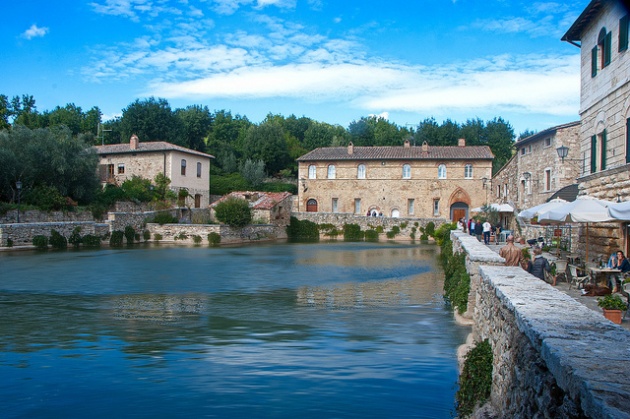



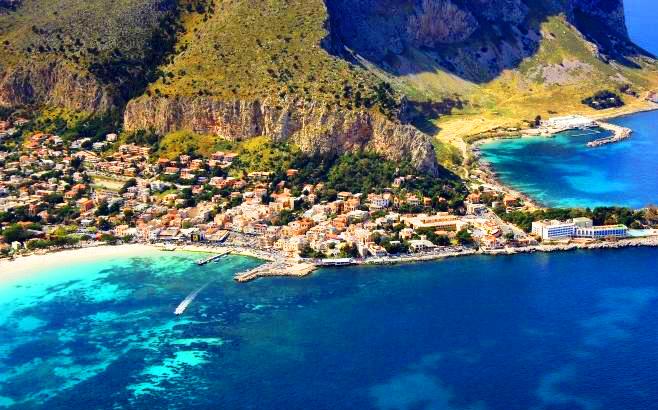

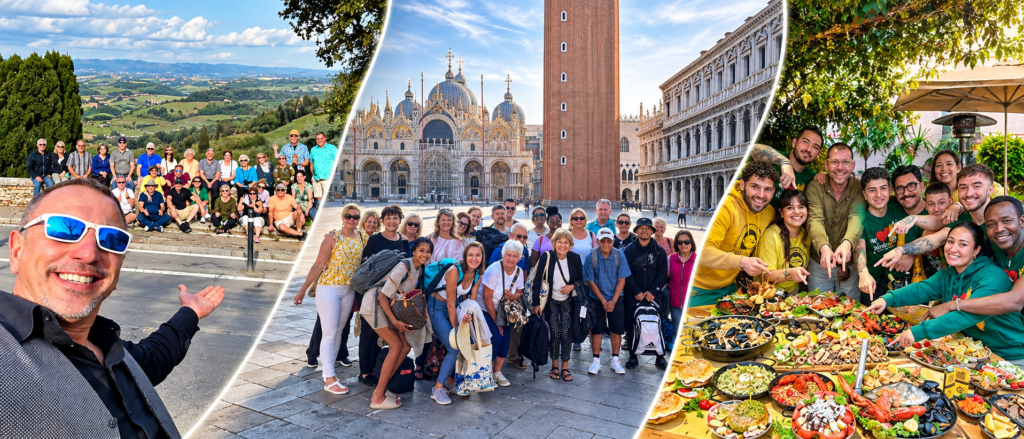
There has been an enormous change in the way people plan trips to Italy. Twenty years ago, travelers looking for a guide in Rome, a boat in Sicily, a driver on the Amalfi Coast or a wine experience in Tuscany usually dealt with a travel professional or directly with someone on the ground.
Today, travelers increasingly rely on search engines, AI-powered travel tools, apps and online marketplaces when discovering experiences in Italy. Tripadvisor, Viator, GetYourGuide, Booking.com, Expedia and others have made purchasing travel experiences incredibly easy.
Convenience has value. But after more than twenty years working in Italian tourism, we believe travelers should understand who they are actually booking with, who is providing their experience and where their money ultimately goes.
One of the most powerful companies in this space is Tripadvisor, which many travelers still think of primarily as a place to read reviews. But Tripadvisor is no longer simply a review website.
In 2014, Tripadvisor acquired Viator for approximately $200 million, significantly expanding its involvement in selling tours, attractions and activities. Today, Tripadvisor serves travelers during the discovery and planning process, while Viator focuses more heavily on travelers who are actively shopping and ready to book. Both brands use Viator’s centralized supply platform, which at the end of 2025 included more than 425,000 bookable experiences from over 70,000 operators.
Think about what that actually means.
A traveler may go to Tripadvisor believing they are simply researching what to do in Rome, Sicily, Florence or the Amalfi Coast. They read reviews, compare experiences and decide what interests them. Increasingly, however, they are also presented with the opportunity to book within the same broader commercial ecosystem.
That does not make Tripadvisor or Viator a monopoly and there are major competitors, including GetYourGuide, Booking.com and Expedia. But it does raise an important question about market concentration. How much influence should a relatively small number of enormous global platforms have over which local businesses travelers discover, which experiences receive the greatest visibility, what travelers ultimately book and how much of that spending remains in the destination?
The review, the recommendation and the sale are no longer always separate things.
A platform that helps influence what you decide to buy may also have a financial interest in what you ultimately book. This is no longer a small corner of the travel industry.
In the third quarter of 2025 alone, Tripadvisor reported approximately $1.3 billion in gross booking value through Viator and around 6.6 million experience bookings. That gives some idea of the enormous scale at which these commercial relationships now operate.
The company you book with may not be the company taking you anywhere
This is one of the most misunderstood aspects of online travel. The beautiful boat trip you discover on a global marketplace may actually be operated by a small Sicilian boat company. Your guide may be an independent licensed Italian guide. The wine experience may be provided by a family owned vineyard. Your driver may work for a local transportation company whose name you have never even seen.
The marketplace may have helped you discover and book the experience, but the people actually creating it are often local businesses and independent professionals working in the destination itself.
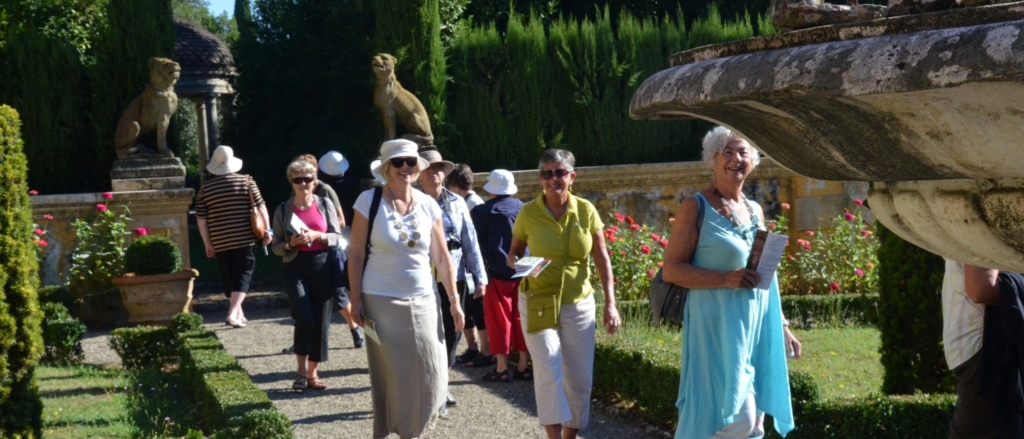
And very often, when a marketplace experience is wonderful, it is wonderful because the local operator is wonderful.
So why not find out who that operator actually is?
The same experience can travel a long way around the internet
An experience created by a local operator may be sold through a marketplace and distributed through additional travel partners and booking channels.
Booking.com, for example, explains that when you book an attraction, your contract may actually be with the service provider or a third party aggregator. In some cases, these aggregators act as intermediaries, while in others they purchase attraction services and resell them.
So instead of asking only, “Which website should I book this on?” travelers should also ask, “Who actually operates this?”
Where does your money actually go?
Global marketplaces provide technology, international marketing, payment processing, distribution and access to millions of potential travelers. Naturally, they charge operators for those services, and those commissions can be significant.
GetYourGuide’s own supplier documentation provides an illustrative example using a 30% commission. Actual commission rates vary by supplier and market, but consider what 30% means:
Traveler pays: €1,000
Illustrative 30% marketplace commission: €300
Amount remaining for the local operator: €700
That €700 should not be confused with profit. From it, the local operator may still need to pay guides, drivers, captains, vehicles, boats, fuel, insurance, licenses, taxes, equipment, employees and administration.
The marketplace has its own operating and marketing costs as well. But the important distinction is that the local operator must fund the actual delivery of the experience from the portion of the booking revenue that remains.
If supporting local matters to you, it is worth understanding how much of your travel spending actually reaches the people providing your experience.
Sometimes operators can pay more for greater visibility
This is something many travelers probably don’t realize. Viator operates a program called Accelerate, through which participating operators can increase their commission contribution in return for increased promotional exposure.
That raises an important question:
Why is this particular tour appearing so prominently on my screen?
It may genuinely be an excellent experience. But prominent placement on a commercial marketplace should not automatically be interpreted as an independent judgment that it is the best guide, boat company or experience available.
Booking.com similarly explains that attractions carrying an “Ad” badge involve paid placement.
The broader point is simple: what you see first online isn’t necessarily a hand selected list of the finest local experiences.
Why would a local operator agree to this?
Because global marketplaces can offer something extraordinarily valuable to a small local operator: global reach.
Imagine operating a few boats in Sicily, running a food tour in Rome or managing a small family winery in Umbria. A global marketplace can suddenly put your experience in front of travelers in New York, Toronto, London, Sydney or Berlin.
Of course that has value. For many small tourism businesses, paying commission may be a perfectly reasonable business decision.
Our question is for travelers:
If you genuinely want to support local people, shouldn’t you at least know how much of what you are spending is reaching them?
The experience you see first isn’t necessarily the best
Sometimes the best guide in town isn’t particularly good at digital marketing. The family with the wonderful little boat may not understand search algorithms. The vineyard owner may not spend evenings optimizing conversion rates. They may simply be exceptionally good at what they do.
And some of Italy’s best experiences are difficult to standardize. The vineyard owner realizes the vendemmia is happening and walks you into the vines. The captain knows which cove is protected from today’s wind. The driver realizes your children have had enough sightseeing and stops for gelato. The guide discovers you love Caravaggio and changes the afternoon.
Those moments happen because someone knows the destination and has the freedom to respond to you.
Customer service matters most when something goes wrong
When everything works, online marketplaces can work beautifully. The problem becomes more complicated when the boat cannot depart, your train is late, a driver doesn’t arrive, your child becomes ill or a meeting point changes.
Now there may be a traveler, a marketplace, an aggregator and the actual local operator involved in resolving the same problem. When you work directly with a reputable local operator or an Italy specialist who actually knows that operator, the chain can be considerably shorter.
Someone answers the telephone. Someone knows the driver. Someone knows the guide. Someone takes responsibility.
Before You Click “Book Now”: 7 Questions to Ask
- Who actually operates this experience? Find out who is providing the guide, vehicle, boat or activity, not simply which website is collecting your payment.
- Can I book directly? See whether the actual operator has its own website or booking system.
- Why am I seeing this experience first? Don’t assume prominent placement automatically means best.
- What is the maximum group size? “Small group” can mean six people or 25. If something is advertised as private, ask exactly what is private: the guide, vehicle, boat or entire experience.
- Who helps me if something goes wrong? Know who will actually be responsible for solving problems while you are in Italy.
- Does this company really know the destination? Ask specific questions. Genuine local knowledge becomes apparent very quickly.
- Where is my money going? If supporting local communities matters to you, consider how much of what you spend reaches the people actually providing your experience.
Supporting local means more than choosing a local restaurant
Travelers increasingly tell us they want to support local communities. That philosophy shouldn’t stop at dinner. Tourism is the licensed guide who spent years studying Italian history and art. It is the family operating boats from a Sicilian harbor. It is the driver who has spent decades learning Italy’s roads. It is the vineyard passed through generations. It is the chef, artisan, hotelier, archaeologist and small business owner who makes a destination worth visiting.
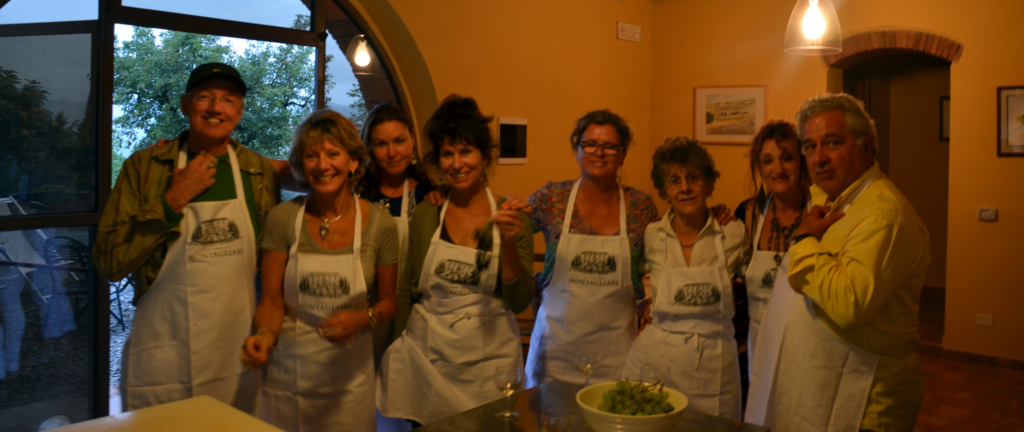
These people aren’t ancillary to the Italian travel experience. They are the Italian travel experience.
This is why, at Italy Vacation Specialists, we still believe in people. For more than twenty years, we have built relationships with the people who actually make travel in Italy possible. At our roots, we are a group of drivers, guides and local travel professionals, many of whom have seen firsthand how the growth of large technology platforms can reduce the share of tourism revenue that remains with the people actually delivering the experience.
And the impact extends far beyond sightseeing. Hotels, accommodations, boat operators, wineries and countless other local businesses face many of the same pressures. We know hotels because we have slept in them. We know boats because we have been on them. We know guides and drivers because we have traveled alongside them. We visit destinations and experience the services we recommend ourselves because we believe there is enormous value in knowing who is actually taking care of our travelers.
Technology can make travel easier. We use it every day, and we have invested heavily in technology within our own company. But we believe technology should facilitate human relationships, not replace them.
Because ultimately, the Italy people remember isn’t on an app, and AI isn’t in Italy.
It is the vineyard owner who stayed talking with you long after the tasting was supposed to end. It is the captain who knew where to find that perfect stretch of coastline. It is the guide who made history come alive. It is the driver who knew where to stop. It is the family who has been welcoming travelers into the same hotel for generations.
As technology, algorithms and enormous global marketplaces play an increasingly powerful role in determining what travelers see and where they spend their money, perhaps we should all think a little more carefully about who ultimately benefits from the choices we make when we travel.
There is nothing wrong with using technology to discover Italy, and there is nothing inherently wrong with booking through a marketplace. But before you click “Book Now,” take another moment. Ask who created the experience. Ask who will actually provide it. Find out where your money is going. And whenever you have the opportunity, consider supporting the people and businesses that make the places you travel to worth visiting in the first place.
Technology may help us find Italy. But people are still the ones who make us fall in love with it.
Travel locally. Think consciously. And whenever you can, support locally too.
PLAN A BETTER TRIP TO ITALY
For more than 20 years, Italy Vacation Specialists has created extraordinary personalized journeys throughout Italy. Our team of local drivers, guides and tour directors knows the country firsthand, allowing us to take you beyond the obvious and introduce you to the Italy we know and love. Together, we can help you plan an extraordinary journey.
Ready to start planning? Talk to one of our Italy specialists today.